Dislocations in layered carbon nanomaterials
Affiliation:🏛️Institut des Matériaux de Nantes Jean Rouxe, Nantes, France 🗺️ .
Reserach team 👥 Materials physics and nanostructures (PMN ) team
Supervisors: Dr. Christopher Ewels , RD CNRS & Dr. Colin Bousige , RD CNRS.
Starting date: 12 Nov 2024
Duration: (03) Three years
Status: 🟩🟩🟩|🟩⬜⬜|⬜⬜⬜
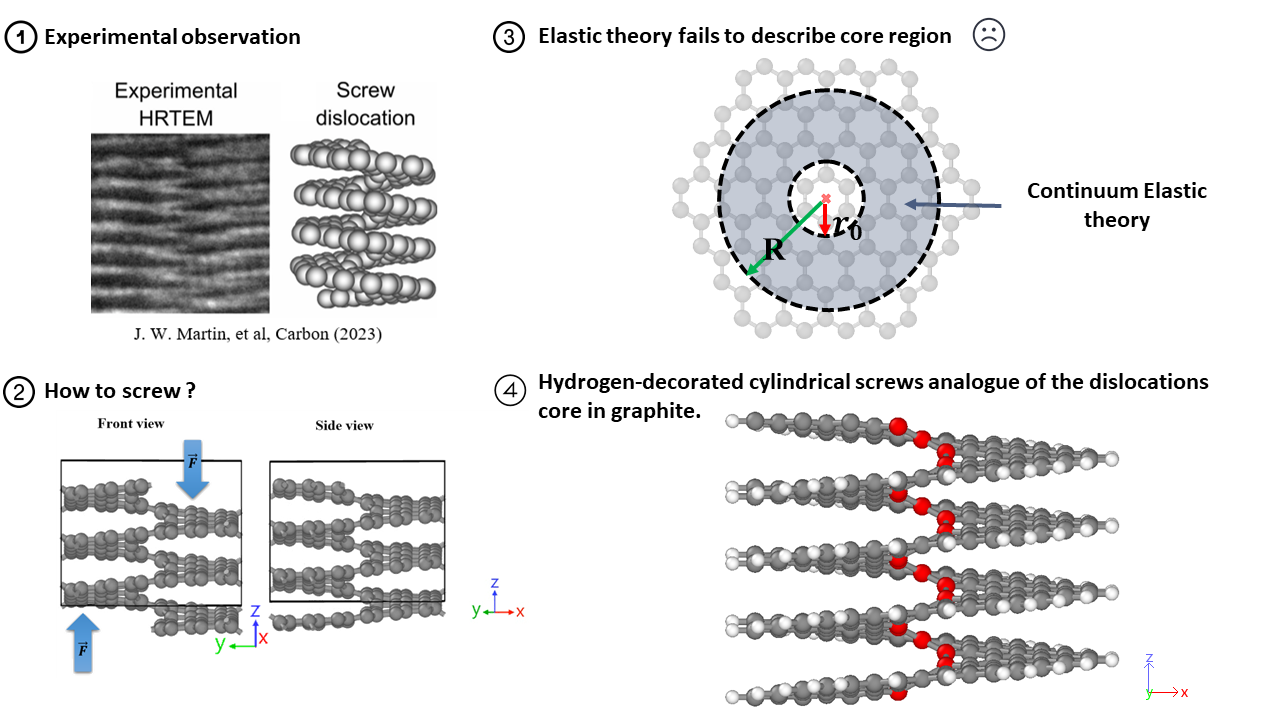
In materials engineering, defects such as dislocations (e.g. screws and edges) are of fundamental importance. The control of these defects has the potential to drive significant advancements in the field of materials science. However, these defects are not yet fully understood, especially in the case of anisotropic materials. My research focuses on understanding the behaviour of these defects and their impact on layered materials such as graphite. To this end:
Table of contents
- I. Conferences
- I.1 The Carbon conference 2025, Saint-Malo, France (June 29th → July 4th 2025)
- I.2 The NanoteC24 conference, Nantes, France (27th → 30th August 2024)
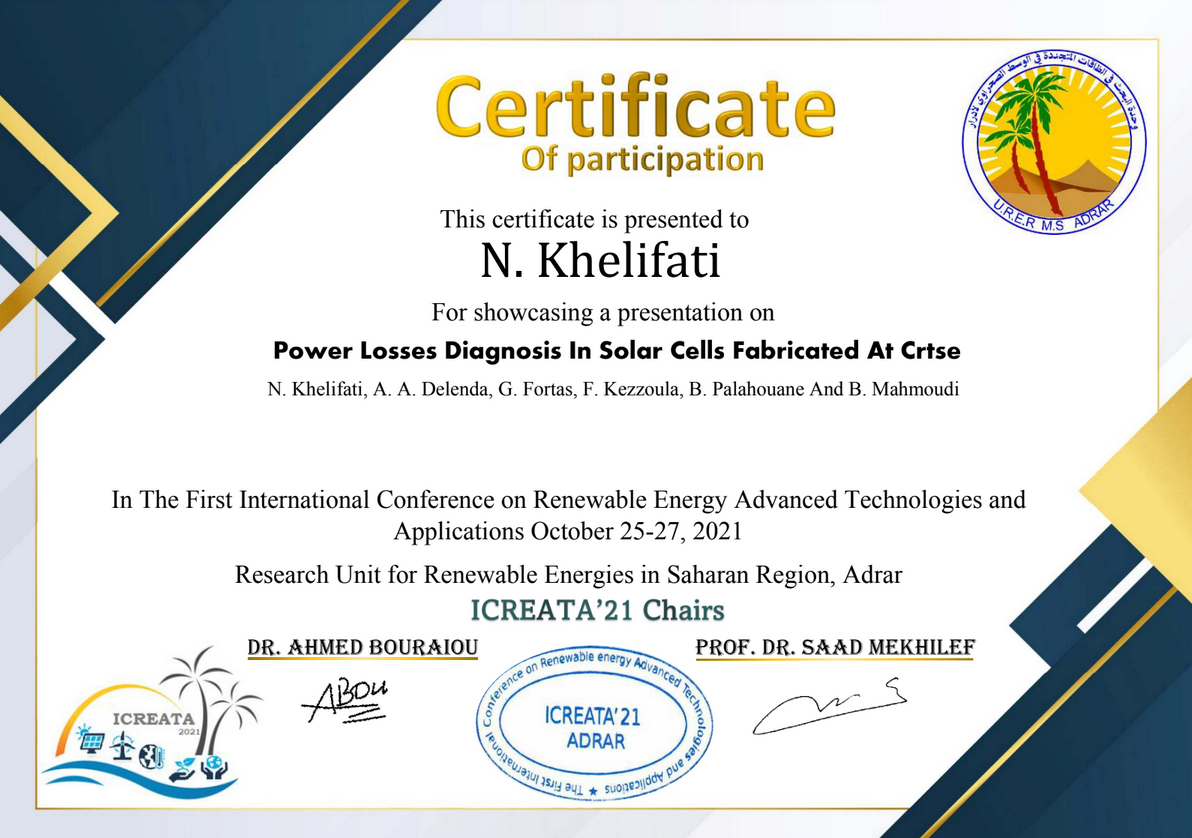
- I.3 THE FIRST INTERNATIONAL CONFERENCE ON RENEWABLE ENERGY ADVANCED TECHNOLOGIES AND APPLICATIONS (ICREATA'21), Adrar, Algeria 25th → 27th October 2021
- II. Workshops
- II.1 The Pyroman workshop (PNRB), Rennes, France (28th → 29th June 2025)
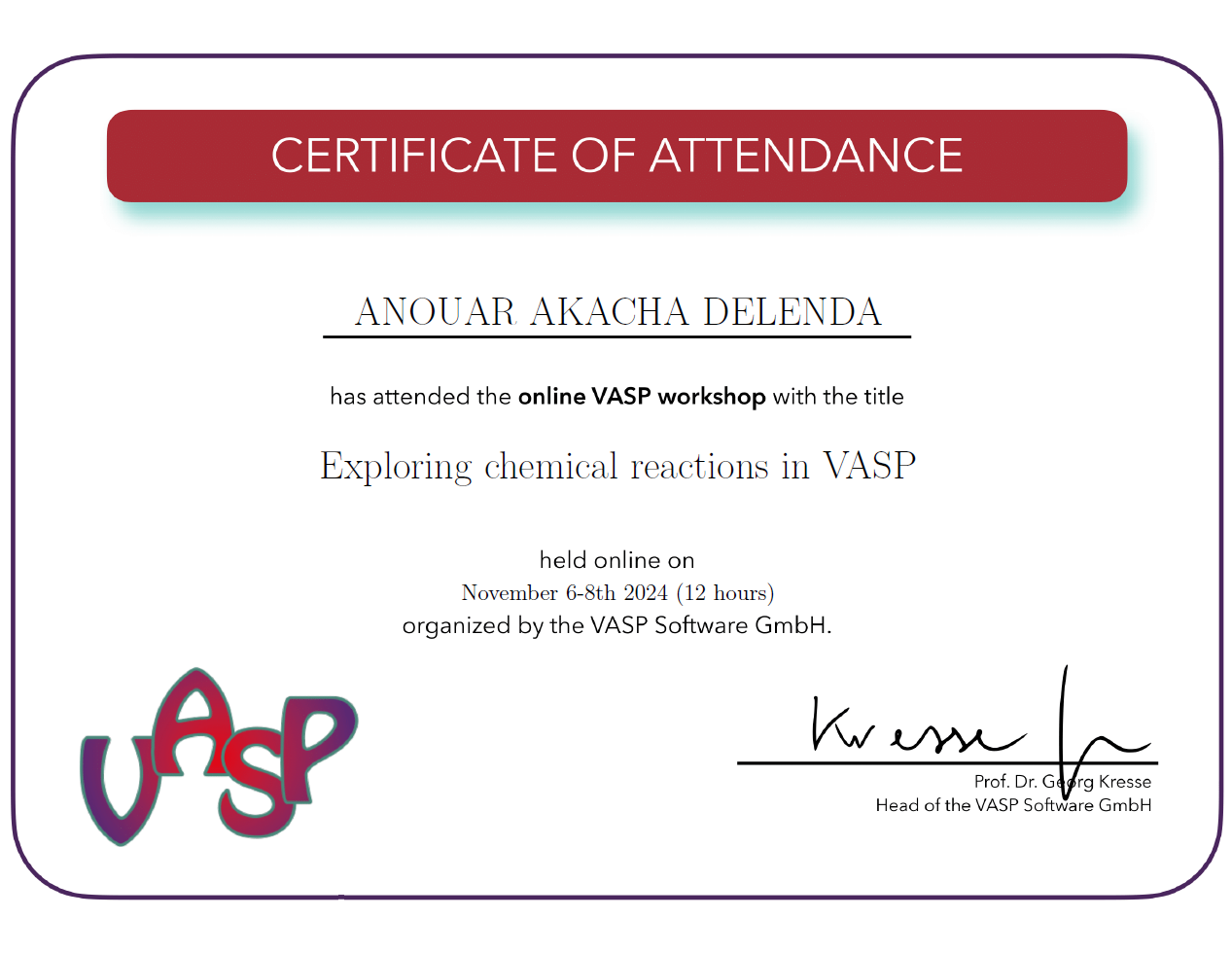
- II.2 Exploring chemical reactions in VASP (Online 🌐) (06th → 08th November 2024)
N.B:
Websites for conferences and workshops are generally not maintained for more than one year. So, if some links does not work, it is probably because the platform is no longer maintained.
I. Conferences
I.1 The Carbon conference 2025, Saint-Malo, France (🗺️ )

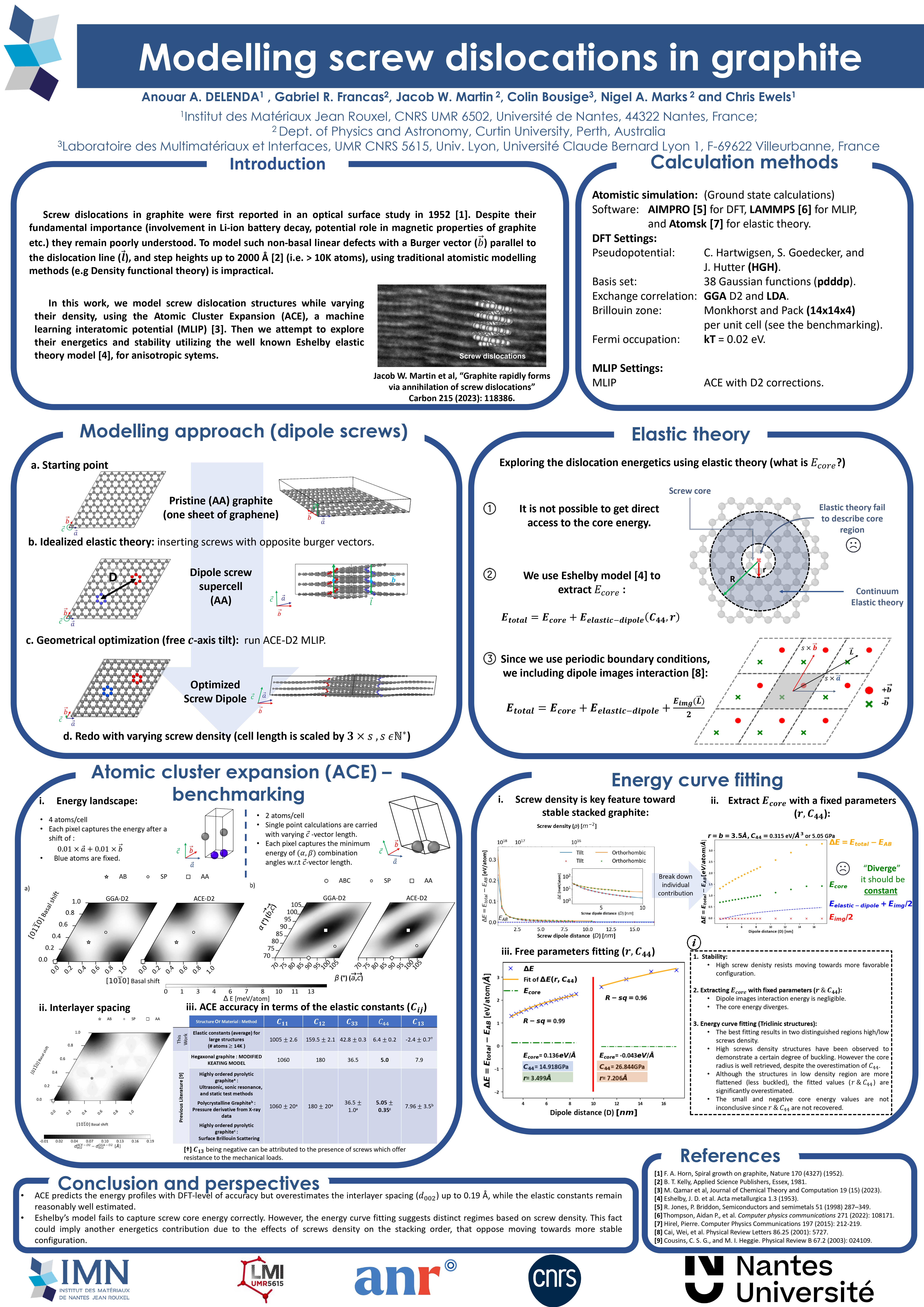
The Carbon Conference is an international event organised every year in a different location around the world, including Europe, Asia and the United States. It gather scientists specialising in carbon materials from academia and industry gather to exchange views on all aspects of this fascinating element. Topics covered include the various synthesis processes, applications and characterisation of carbon materials, and an understanding of their properties. During this conference I participated with a poster titled: Modelling screw dislocations in graphite.
Poster
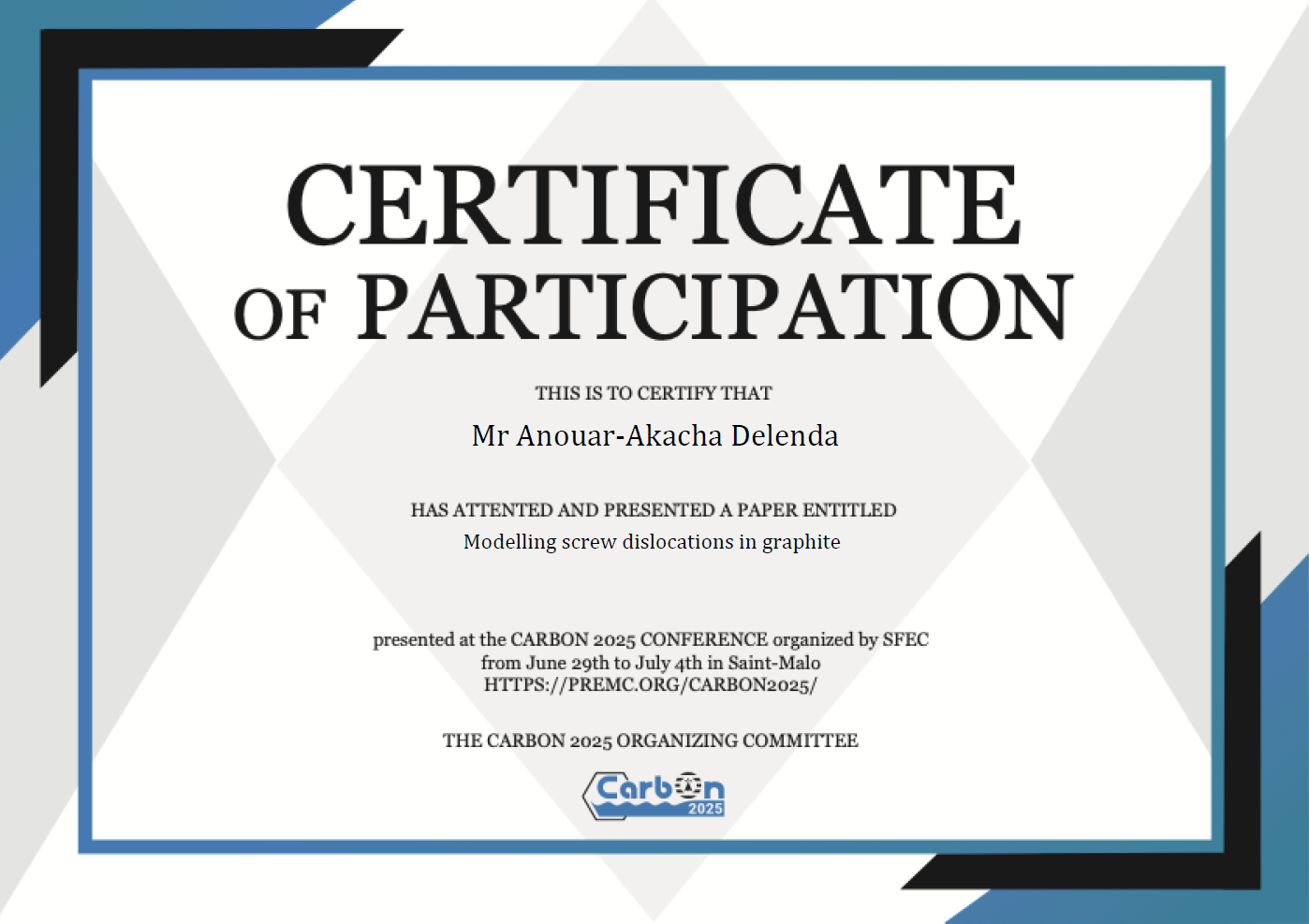
Participation cetificate
I.2 The NanoteC24 conference, Nantes, France (🗺️ )
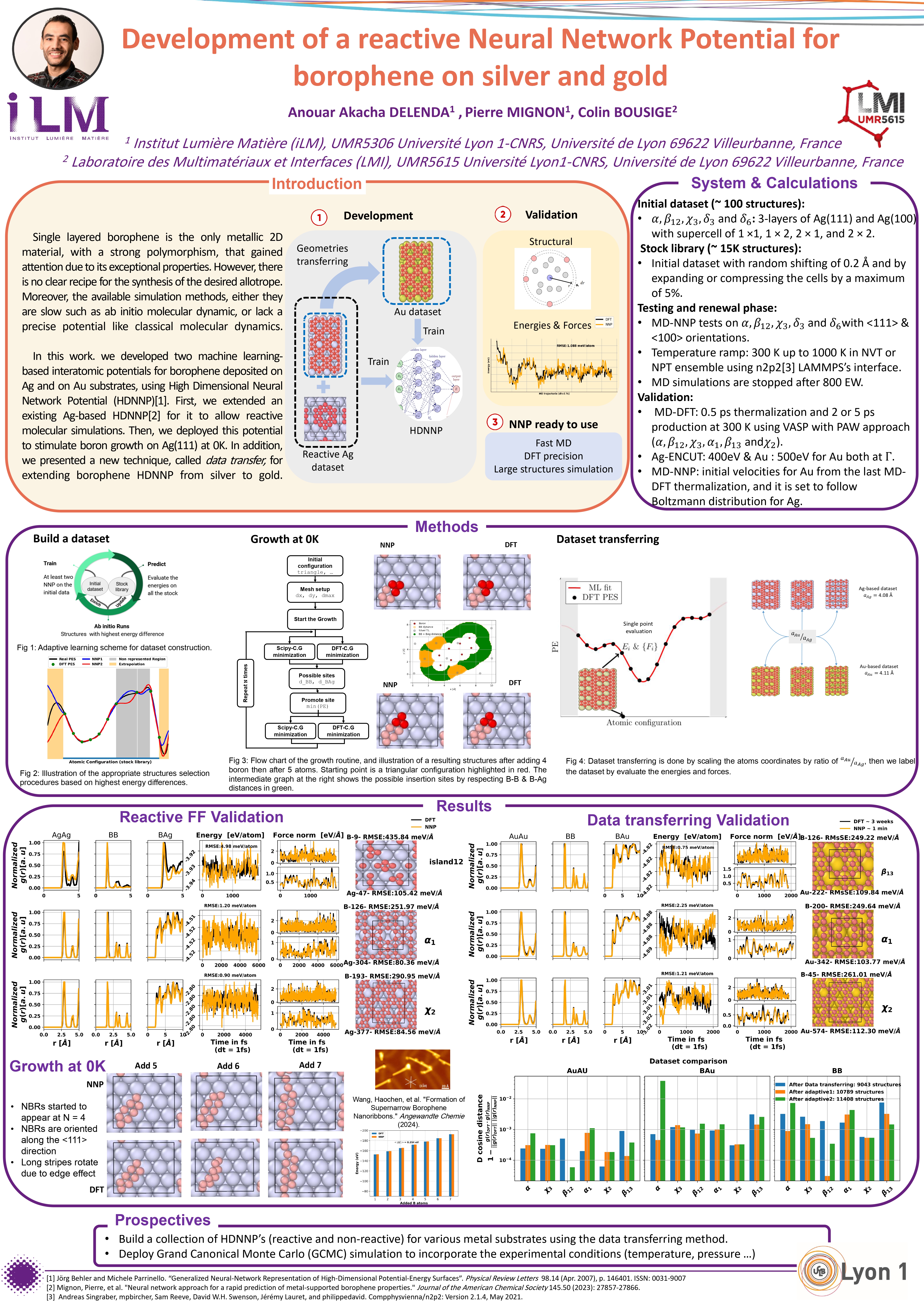
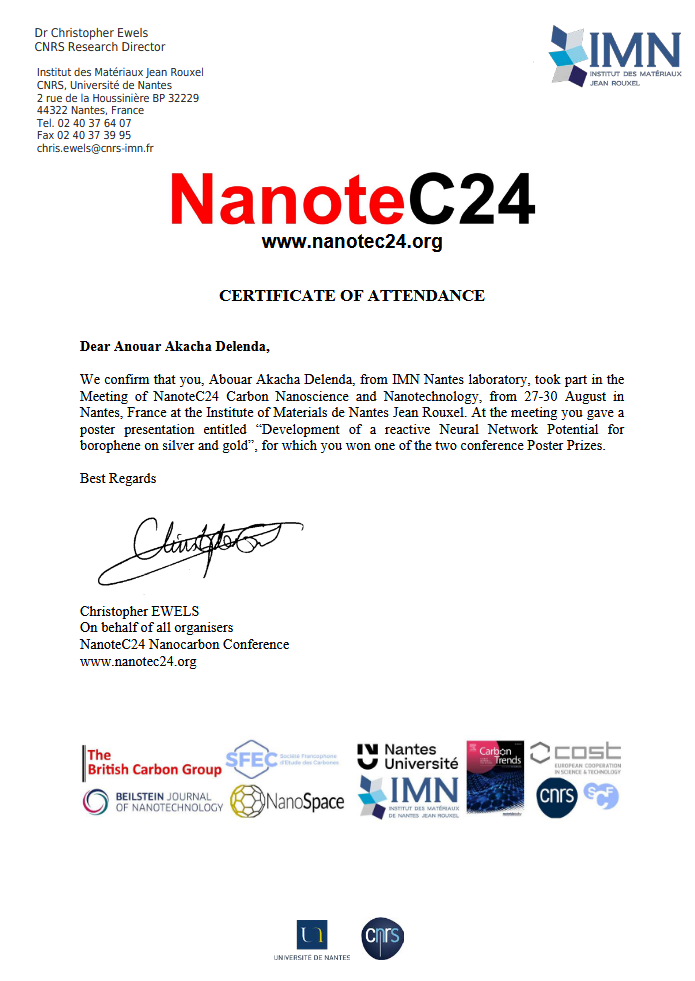
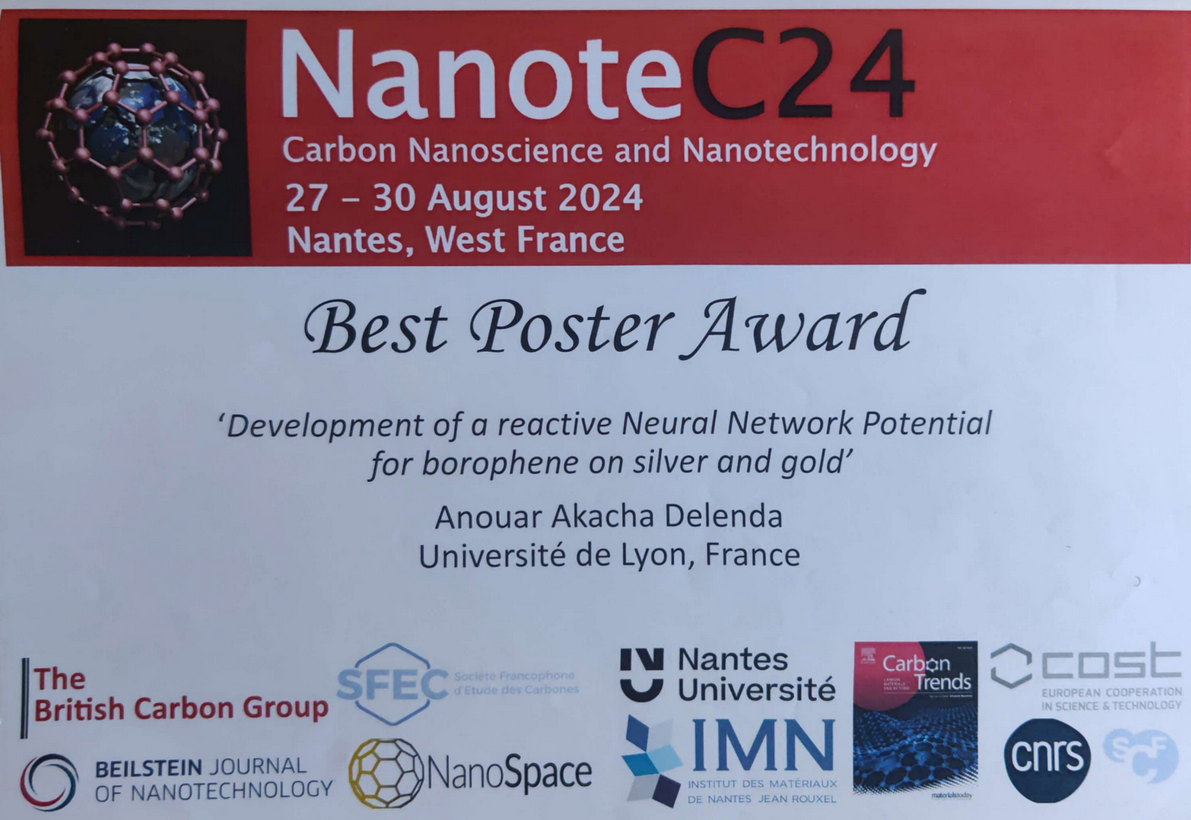
The NanoteC is a student friendly international meeting focusing on nanocarbon materials: their production, treatment, properties, in all their monocolour (black) glory! This three days meeting has been running annually,almost continuously since 1998, and in 2024 it took place in Nantes at the Institute of Materials, one of its regular haunts here many previous memorable NanoteCs have taken place. During this conference I participated with a poster titled: Development of a reactive Neural Network Potential for borophene on silver and gold. A fruitful work of the internship conducted at Institut de Lumière Matère (ILM), Theoretical Physical Chemistry team and Laboratory des Matériaux et Interfaces (LMI), Matériaux à Basse Dimensionnalité (MBD) team, during my last master in the University Claude Bernard Lyon 1, France. Villeurbane, France.
Poster
Participation cetificate
Best poster award
I.3 THE FIRST INTERNATIONAL CONFERENCE ON RENEWABLE ENERGY ADVANCED TECHNOLOGIES AND APPLICATIONS (ICREATA'21), Adrar, Algeria (🗺️ )
The video-conference aim to promote an exchange of recent advances and developments among scientists, scholars, engineers and in the various areas of renewable energy technologies include solar photovoltaic and thermal systems, wind farm, hydroelectricity power, biomass, biofuels, geothermal systems, Hybrid energy, Energy Storage, Hydrogen and Fuel Cells, etc.
Participation cetificate
II. Workshops
II.1 The Pyroman workshop (PNRB), Rennes, France (🗺️ )
Bulk Carbon Materials: processing conditions, structure & properties
While a large body of contemporary research focuses on crystalline/ordered nanoforms of carbon (graphene, nanotubes, etc.), most current applications – as structural materials in aeronautics/space or nuclear applications, as electrodes for energy storage or catalysis, as adsorbents for gas/pollutants separation and storage, etc. – still rely on bulk and disordered solids. Describing accurately and unambiguously the inner “structure” - with this word taken in all the possible meanings and length scales - of bulk carbon materials, and relating the very details of this structure to the materials’ processing conditions and properties remains extremely challenging. Nowadays, the ever growing capacity of structural determination and imaging tools, down to atomic scale, as well as the advent of machine learning, brings a new momentum to this topic. More accurate description and modeling of carbon materials structure and properties are at hand. Meanwhile, the processing methods have undergone significant advances, in terms of diversity and of process control efficiency, thanks in particular to in-situ diagnostics.
II.2 Exploring chemical reactions in VASP (Online 🌐)
This workshop is provide by VASP every year. For more information and similar events check the News .
Participation cetificate
M.Sc : Physics of Optics and Photonics (Lyon, France)🏛️ Université de Claude Bernard Lyon 1. Villeurbane, France (🗺️ ) | From September 2023 to June 2024  |
More details
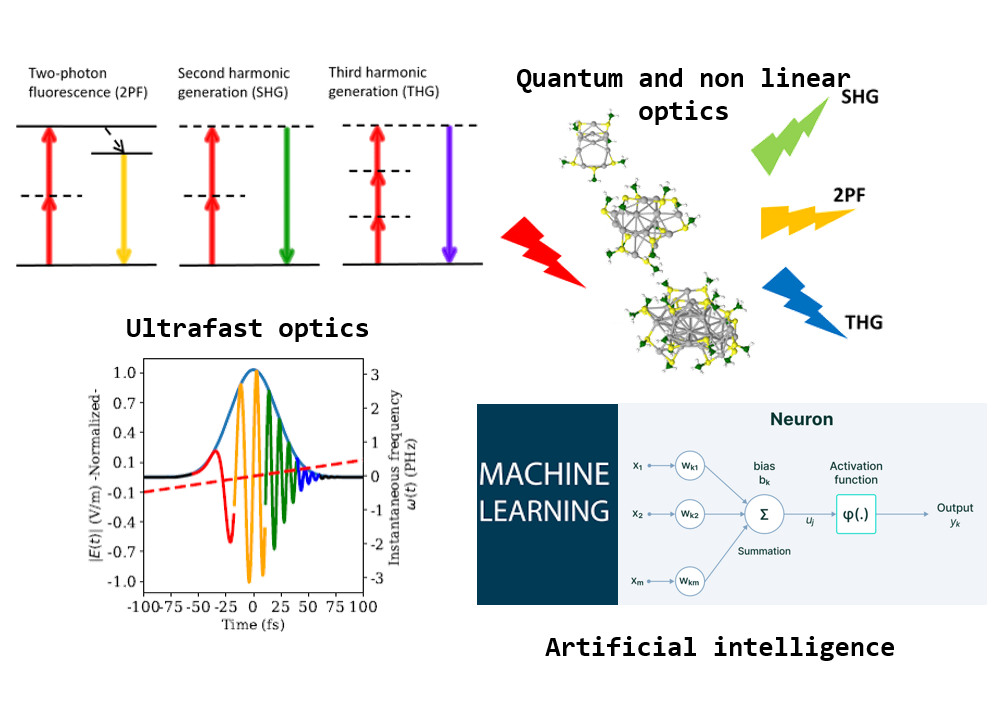 The Master at the university of Claude Bernard Lyon 1, is a new track launched recently (~2022).
The program
is mostly dedicated to Optics and Photonics (OPHO).
The program offers various courses mainly:
The Master at the university of Claude Bernard Lyon 1, is a new track launched recently (~2022).
The program
is mostly dedicated to Optics and Photonics (OPHO).
The program offers various courses mainly:
- Quantum and non-linear optics: Quantification of the Electromagnetic fields, Light nature and Photons statistics, Non-linear Optics process (SFG, SHG, THG ...) etc.
- Ultrafast optics: Ultrafast Dynamic, Autocorrelation; Frequency Resolved Optical Gating (FROG) and probe-pump measurements, Femtosecond Chirped Pulse Amplification (CPA) etc.
- Artificial intelligence: Supervised Machine Learning (Regression & Classification), Neural Network and Convolutional Neural Network ...
M.Sc : Condensed Matter and Nanophysics (Strasbourg, France)🏛️ Université de Strasbourg, Institut Physique et Chimiques Des Materiaux De Strasbourg (IPCM) (🗺️ ) | From September 2022 to June 2023  |
More details
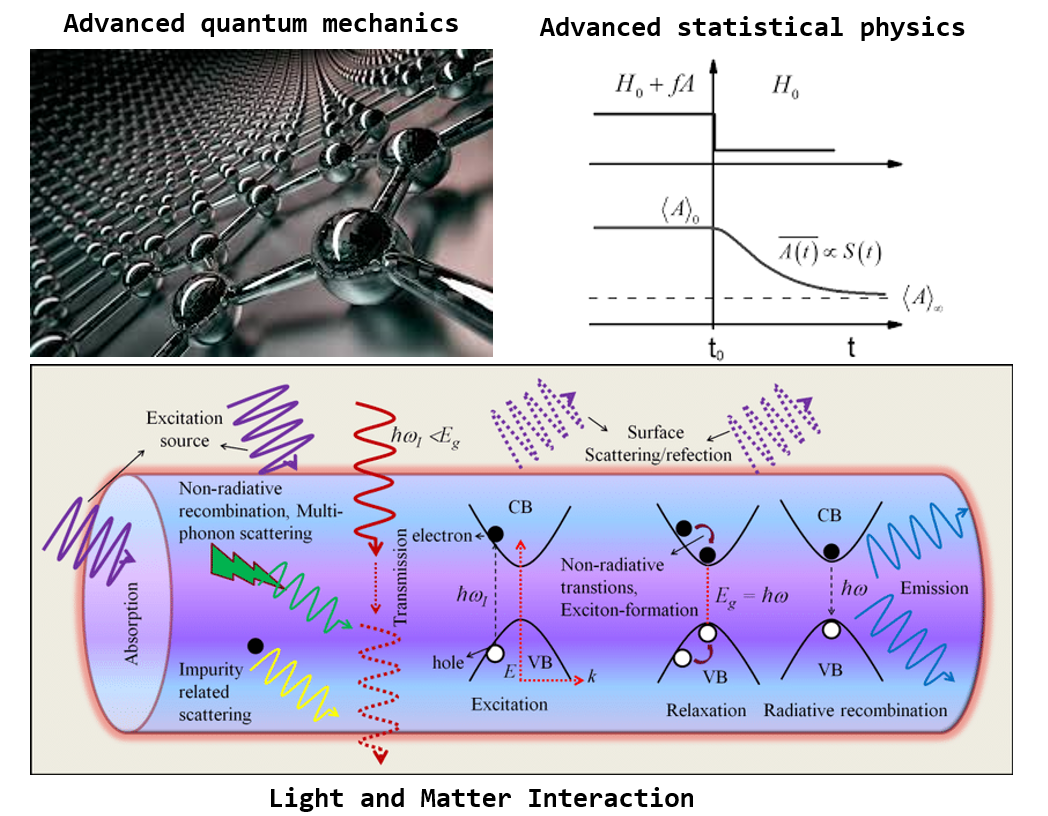 The Master has been renamed as "Physics
of quantum and soft condensed matter (PhyQS)". The program is highly diverse
and unique. The lectures cover materials' electronic structure, optical, magnetic properties,
and their applications on the nanometer scale, while tracking recent advancements in the fields
of nanophysics.
The program has three main pillars hovering around solid-state physics:
The Master has been renamed as "Physics
of quantum and soft condensed matter (PhyQS)". The program is highly diverse
and unique. The lectures cover materials' electronic structure, optical, magnetic properties,
and their applications on the nanometer scale, while tracking recent advancements in the fields
of nanophysics.
The program has three main pillars hovering around solid-state physics:
- Advanced Quantum Mechanics: Quantum theory of diffusion; Landauer-Büttiker approach for the conductance of coherent systems; Kubo formalism and linear response theory for quantum electronic transport; graphene...
- Advanced Statistical Physics: Non-equilibrium statistical physics and transport phenomena: Brownian motion (concept of “coarse-graining”); Markov processes (Fokker-Planck and Langevin equations...); linear response theory (fluctuation-dissipation theorem & Kramers-Kronig relation).
- Light and Matter Interaction: Linear response of a material medium to an electromagnetic excitation; semi-classical approximations and optically induced transitions between electronic states of matter (Franck–Condon) ...
B.Sc and M.Sc : Materials Physics (Algiers, Algeria)🏛️ University of Science and Technology - Houari Boumediene (USTHB), Algiers, Algeria (🗺️ ) | From 2019 to 2021 (Bachelors + Graduate/Master)  |
More details
Here marks the beginning of my journey. After three years of studying fundamental physics, I decided to pursue a master's degree in Materials Physics. During this phase, I acquired a robust foundation in solid-state physics. Furthermore, the track I selected was focused on Semiconductors and Dielectric Materials. The program aimed to prepare future materials science researchers, encompassing both experimental and theoretical aspects. The master's program offered a range of lectures, and I will highlight a few of them:
- Physics of Condensed Matters
- Elastic Waves in Fluids and Solids
- Dielectric and Magnetic Properties of Materials
- Advanced Optics and Laser Physics
- Transport Phenomena in Semiconductors
- Materials Characterization
Identification of borophene allotropes from STM images by Machine Learning: from the development of a neural network interatomic potential to building the image classification tool.
February 2024 → July 2024 (Master2)
🧪🔬🖥️ Institut de Lumière Matère (ILM) , team: Theoretical Physical Chemistry
🧪🔬🖥️ Laboratory des Matériaux et Interfaces (LMI) , team: Matériaux à Basse Dimensionnalité (MBD)
📑 Thesis
More details
Borophene is a 2D material that has honeycomb structures similar to graphene. Borophene exists in various structures called allotropes. Furthermore, to characterize such materials, a Scanning Tunneling Microscope (STM) is generally used. However, the process is not straightforward and involves comparing experimental data to theoretically simulated images generated from Density Functional Theory (DFT). Although DFT is accurate, it is time-consuming. The intended purpose is to utilize an existing Neural Network Potential (NNP) to create a database of structures and simulated STM images for training and testing a classification neural network.
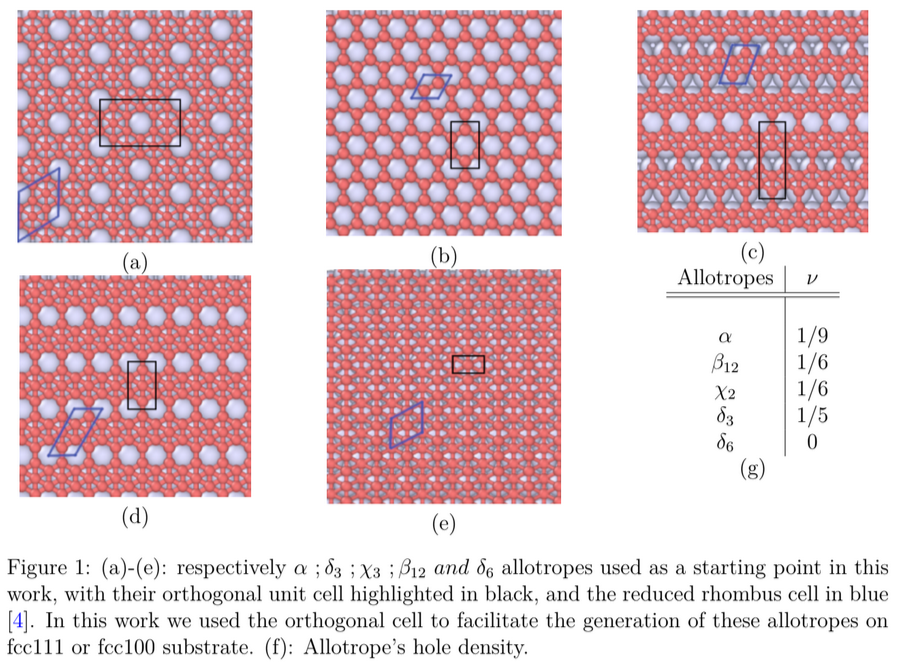 Borophene Allotropes | 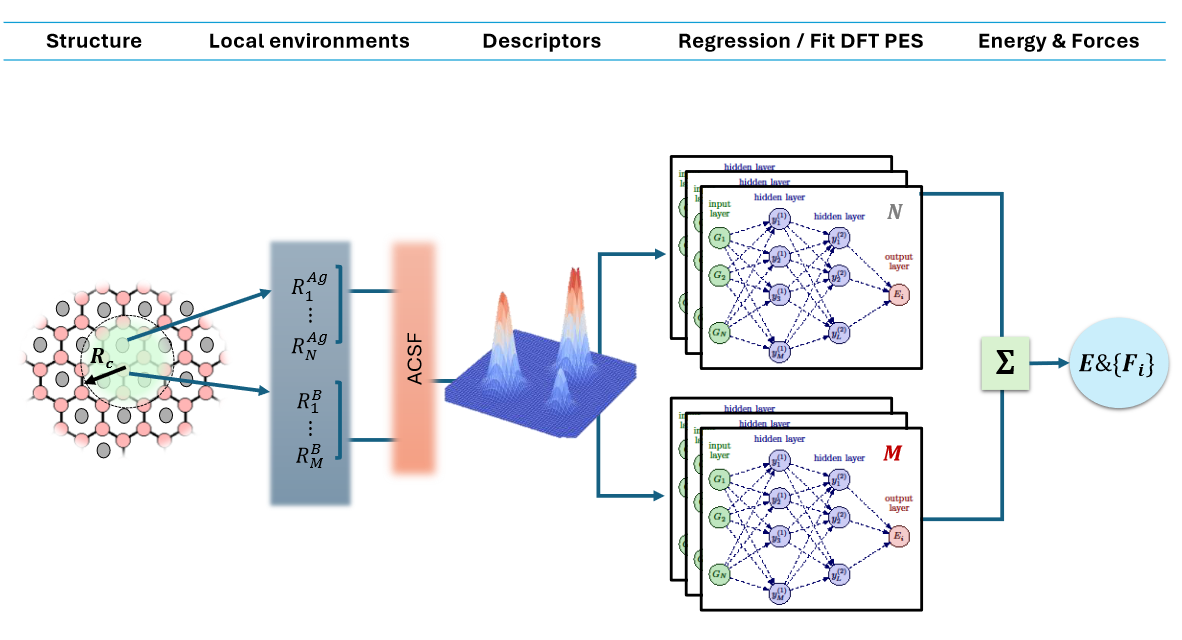 High dimensional neural network architecture | 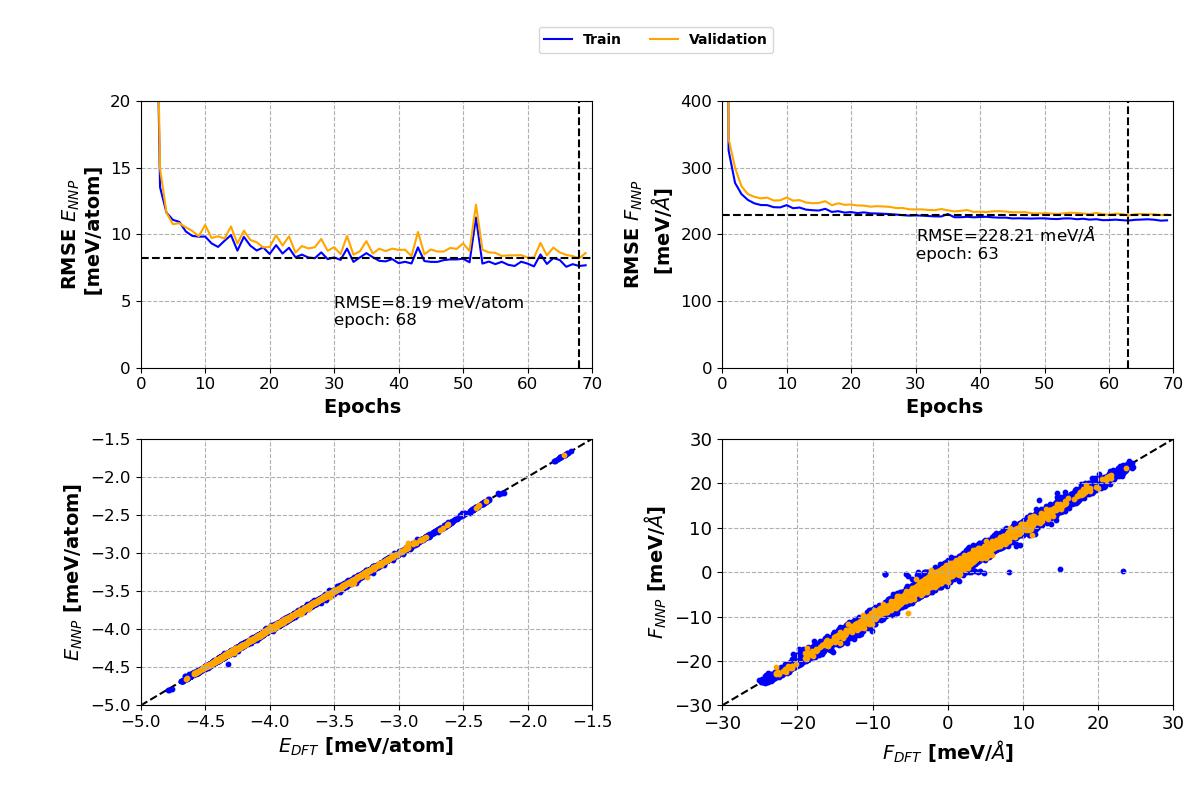 Energies & Forces-normes validations |
Characterization Of Ultrashort Laser Pulse Centred at 800 nm
February 2023 → June 2023 (Master2)
🧪🔬🖥️ Institut de physique et chimie des Matériaux de Strasbourg (IPCMS) , department: Ultrafast Optics and Nanophotonics (DON)
📑 Thesis
More details
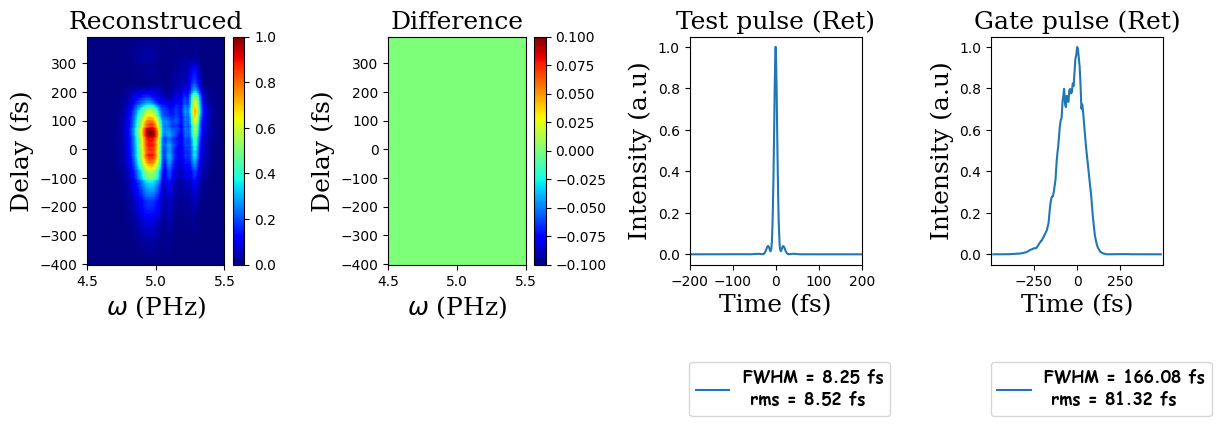
In order to study the kinetics of molecules and probe their optical properties, we employ spectroscopy, which enables us to perform transient absorption and observe the signatures of rapid photo-reactions (e.g., carbon-carbon double bond isomerization) occurring on picosecond or sub-picosecond timescales. However, achieving this requires a well-characterized laser pulse, which means full access to temporal and spectral profiles. Unfortunately, electronic measurement does not accommodate the rapid oscillation of the electric field (few cycles). Here, we call for indirect optical characterization, such as using Frequency Resolved Optical Gating (FROG). For this work, we deployed Time Domain Ptychography techniques to solve a reconstruction problem, in particular, spectral phase retrieval. I implemented the Time Domain Ptychography algorithm to characterize the ultrashort pulses.
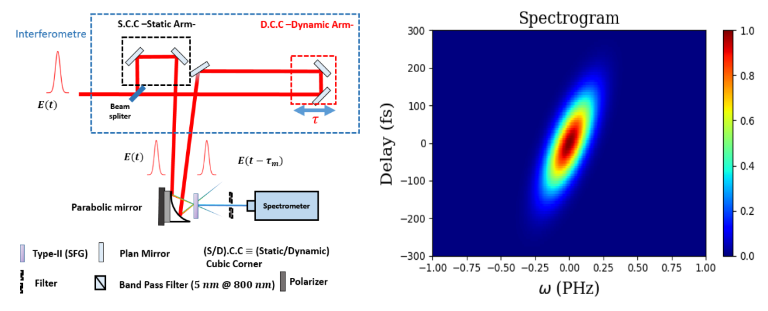 Frequency Resolved Optical Gating (FROG) | 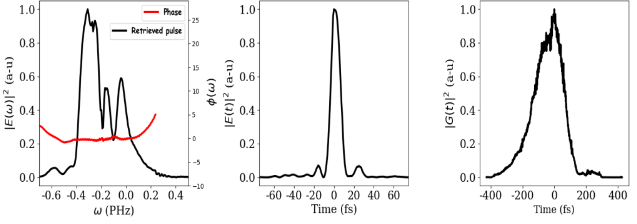 Retrievement of the pulse profile/phase. | 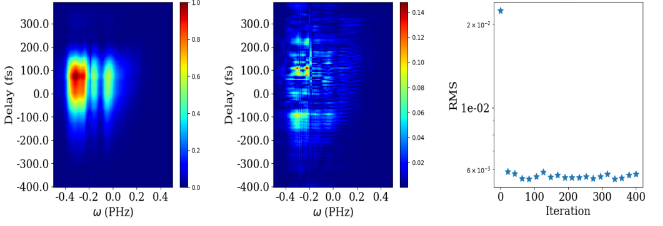 The retrieved 2D FROG map difference between measured & reconstructed spectra. |
Power Loss Analysis On Based Silicon Solar cells
March 2021 → June 2021 (Master2)
🧪🔬🖥️ Research Center for Semiconductor Technology and Energetics (CRTSE) Division: Semiconductor Conversion Device Development
📑 Absract
More details
In order to study the kinetics of molecules and probe their optical properties, we employ spectroscopy, which enables us to perform transient absorption and observe the signatures of rapid photo-reactions (e.g., carbon-carbon double bond isomerization) occurring on picosecond or sub-picosecond timescales. However, achieving this requires a well-characterized laser pulse, which means full access to temporal and spectral profiles. Unfortunately, electronic measurement does not accommodate the rapid oscillation of the electric field (few cycles). Here, we call for indirect optical characterization, such as using Frequency Resolved Optical Gating (FROG). For this work, we deployed Time Domain Ptychography techniques to solve a reconstruction problem, in particular, spectral phase retrieval. I implemented the Time Domain Ptychography algorithm to characterize the ultrashort pulses.
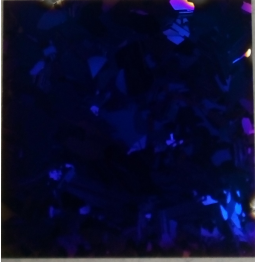 Manufactured m-Si solar cell (before screen printing) | 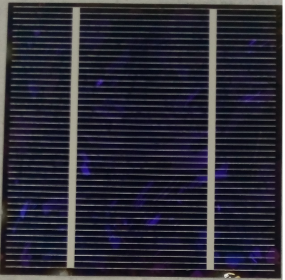 Manufactured m-Si solar cell (after screen printing) with Al leads (contacts) | 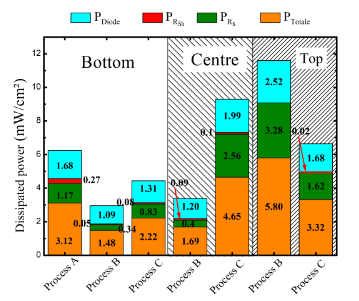 Dissipated Power in the shunt, the series resistance and in the forward bias diode. | Current Analysis of losses due to reflection and parasitic absorption. |